

Description
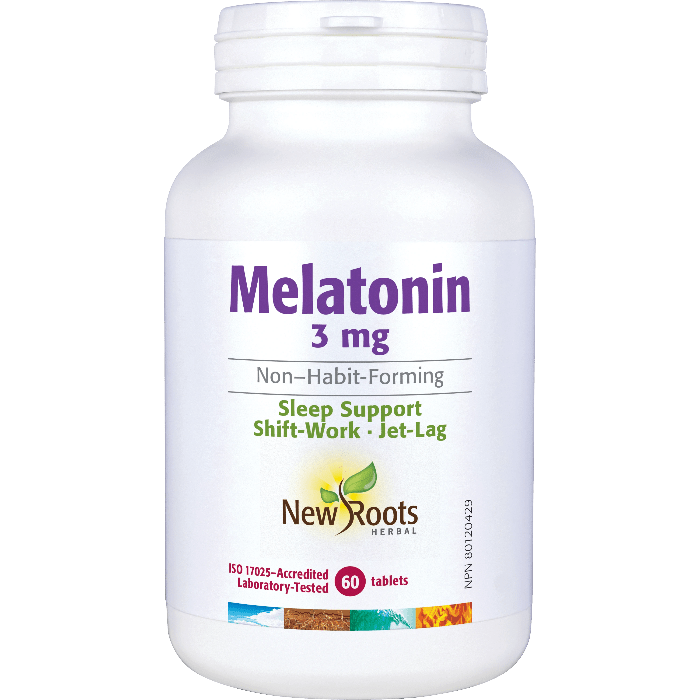
Non–Habit-Forming · Sleep Support · Shift-Work · Jet-Lag
Melatonin is not the major regulator of normal sleep patterns, but undoubtedly has a major effect. One topic that has generated a large amount of interest using melatonin alone, or in combination with phototherapy, is to treat sleep disorders. There is some indication that melatonin levels are lower in elderly insomniacs relative to age-matched noninsomniacs, and melatonin therapy in such cases appears modestly beneficial in correcting the problem. Another sleep disorder is seen in shift workers, who often find it difficult to adjust working at night and sleeping during the day; the utility of melatonin therapy to alleviate this problem is equivocal and appears not to be as effective as phototherapy. In various species including humans, administration of melatonin has been shown to decrease motor activity, induce fatigue, and lower body temperature, particularly at high doses. The effect on body temperature may play a significant role in melatonin’s ability to entrain sleep-wake cycles, as in patients with jet lag.
Where Does It Come From?
The pineal gland, or epiphysis, synthesizes and secretes melatonin, a structurally simple hormone that communicates information about environmental lighting to various parts of the body. Ultimately, melatonin has the ability to entrain biological rhythms and has important effects on the reproductive function of many animals. The pineal gland is a small organ shaped like a pinecone (hence its name). It is located on the midline and attached to the posterior end of the roof of the third ventricle in the brain.
Travelling
Another condition involving circadian-rhythm disruption is jet lag; in this case, it has repeatedly been demonstrated that taking melatonin close to the target bedtime of the destination can alleviate symptoms—melatonin has the greatest beneficial effect when jet lag is predicted to be worst (e.g. crossing many time zones). Travellers now have the option of taking melatonin to help counteract the effects that flying has on getting a good night’s sleep. Taking melatonin to reduce jet lag is probably the safest and best-tested use of the hormone to date. In using melatonin during travel, the goal to be in bed and asleep during the normal scheduled hours of the destination.
Expiration date: 03/2027
Supplement Facts
Ingredients
Each tablet contains:
Melatonin: 3 mg
Other ingredients: Dicalcium phosphate, microcrystalline cellulose, croscarmellose sodium, silicon dioxide, vegetable magnesium stearate, and vegetable stearic acid.
Directions
Directions of Use
Adults: Take 1–3 tablets daily, only at or before bedtime, or as directed by your health-care practitioner. For jet lag: Take once a day at bedtime after darkness has fallen, while travelling, and at destination until adaptation to the new daily pattern in occasional short-term use.



Recently viewed
Disclaimer: The information and accompanying visuals should be used solely for informational purposes. Please note that the information provided on this website is not intended to replace professional medical advice, diagnosis, or treatment. Product descriptions and relevant nutritional information are supplied by the vendor.
Secure checkout